
If I don't have insurance, can I still sue an at-fault driver in Louisiana?
Can I sue for damages in a car accident in Louisiana if I don't have car insurance?
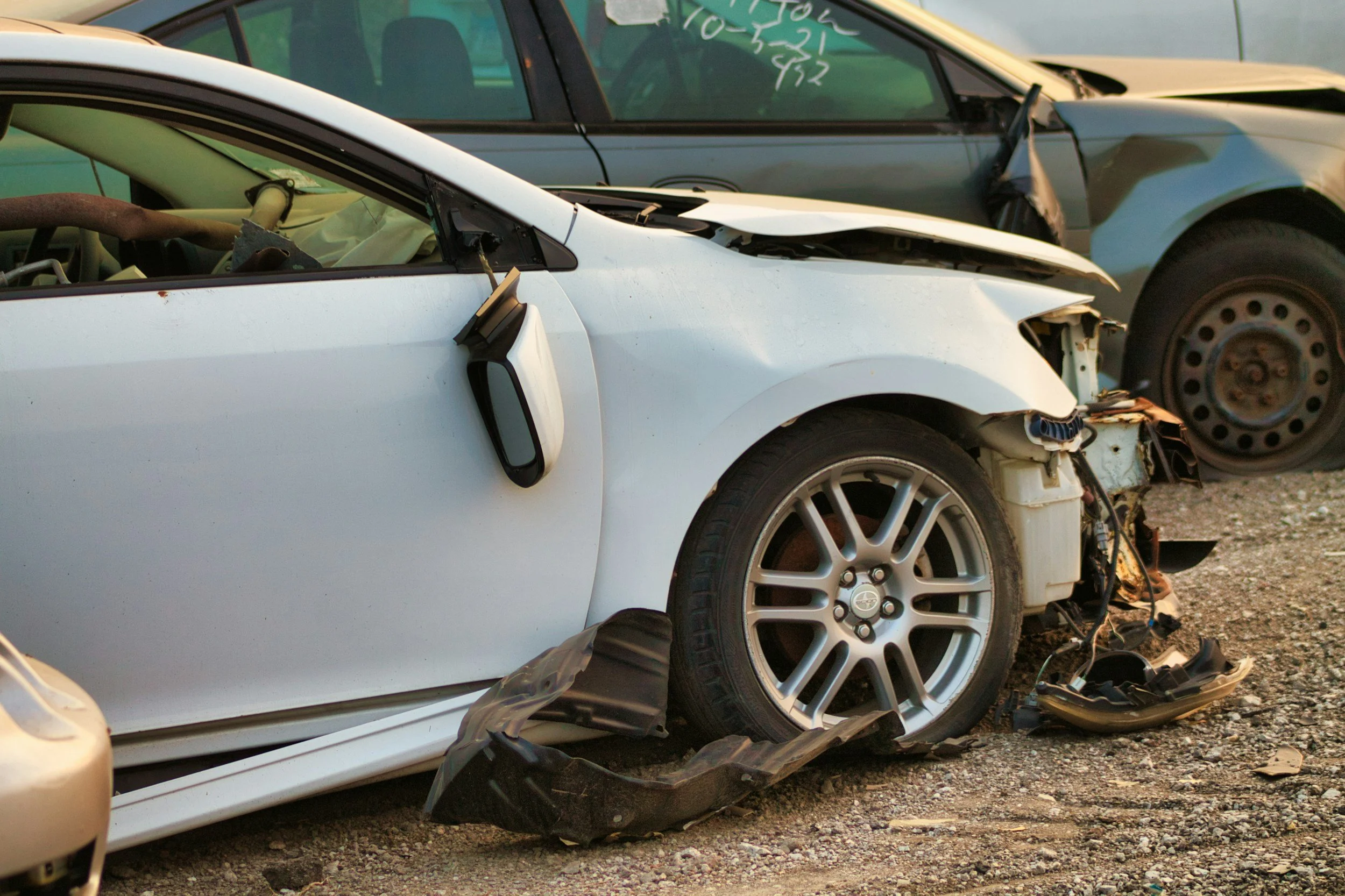
In Louisiana, the answer is yes, but with a massive financial penalty that often makes suing pointless for minor or moderate accidents.
Under Louisiana's updated "No Pay, No Play" law (HB 434), if you are driving without the state-required liability insurance, you are barred from collecting the first $100,000 of bodily injury damages and the first $100,000 of property damage repairs—even if the accident was 100% the other driver's fault.
Essentially, driving uninsured gives you a mandatory $100,000 deductible on your own settlement. While you can sue for damages exceeding this amount, this law effectively wipes out the entire claim for the vast majority of accidents.
Understanding Louisiana's "No Pay, No Play" Law
Imagine this scenario: You are on your way to work, on time, doing all the right things. Suddenly, someone swerves into your lane and sideswipes you. It is clearly their fault. But then the realization hits you—your own car insurance lapsed a couple months ago and you have been forgetting to update it.
The big question is: Can you still sue the at-fault driver for your medical bills and car repairs?
Historically, the penalty for being uninsured was a $15,000 reduction in your bodily injury settlement and a $25,000 reduction for property damage. However, following the passage of HB 434 in August of 2025, Louisiana lawmakers significantly raised the stakes to combat high insurance rates.
HB 434 was introduced to lower high auto insurance rates in Louisiana. If an uninsured driver has an accident, they could be responsible for $200,000 in damages before being eligible to recover compensation
The statute now states that uninsured drivers involved in a motor vehicle accident cannot recover the first $100,000 in damages, regardless of fault. This means:
You cannot collect the first $100,000 of bodily injury damages.
You cannot collect the first $100,000 of property damage repairs.
Furthermore, the bill states that if an uninsured driver sues and the awarded damages are $100,000 or less, the uninsured driver will be responsible for their own court costs.
What is the Purpose of the “No Pay, No Play” Law?
Louisiana has historically struggled with extremely high auto insurance premiums, partially due to the high volume of uninsured drivers on the road. This law was introduced and updated to lower those rates by discouraging people from driving without coverage.
The logic behind the statute is simple: "If you don't pay into the system to protect others, you don't get to play in the system to protect yourself."
How the "Deductible" Works in Real Life
To understand how aggressive this law is, here are two common scenarios under the current HB 434 rules:
Scenario A (Minor Accident): Your car has $5,000 in damage. You are uninsured. The other driver is at fault.
Result: You get $0. Because the damage is under the $100,000 exclusion threshold, the other driver’s insurance owes you nothing. You must pay for your own repairs out of pocket.
Scenario B (Major Accident): You have $50,000 in medical bills.
Result: You get $0. The first $100,000 is excluded so you are responsible for your own medical bills.
Are There Exceptions? (When You CAN Sue for Full Damages)
The law is harsh, but there are specific legal nuances where the "No Pay, No Play" penalty does not apply, allowing you to sue for full damages even if you are uninsured.
If you find yourself in one of the following situations, the $100,000 deductible may be waived:
The At-Fault Driver was DUI: If the person who hit you was driving under the influence of alcohol or drugs (and is convicted), the "No Pay, No Play" penalty does not apply to you.
Hit-and-Run: If the at-fault driver flees the scene.
Intentional Acts: If the driver hit you on purpose.
Felony Commission: If the other driver was in the process of committing a felony or was furthering the commission of a felony at the time of the accident.
Parked Car: If your car was legally parked and unoccupied when it was hit, the law does not apply.
Out-of-State Drivers: The law does not apply to drivers from another state if their home state did not require them to have liability insurance at the time of the wreck. States with “no pay, no play” statutes »
State-required Minimum Liability: You do not need to have “full coverage.” Only the state-required minimum liability insurance is required to be exempt from the “No-Pay, No-Play” law.
Legally Parked: The law does not apply to legally parked cars.
Passenger’s Claim: The law does not apply to a passenger’s claim unless the passenger is a co-owner of the uninsured car.
Clearing up common confusions:
What is the "Passenger" Rule in the “No Pay, No Play” Law in Louisiana?
A common misconception is that this law penalizes everyone in the uninsured vehicle. However, the law generally does not apply to a passenger’s claim unless the passenger is a co-owner of the uninsured car. If you are simply riding in a friend's uninsured car and get hurt, you generally retain your right to sue for full damages.
Do I Need Full Coverage to Be Exempt from the “No Pay, No Play” Law in Louisiana?
No. You do not need to have "full coverage" (Collision and Comprehensive) to be protected from this law. You are only required to carry the state-required minimum liability insurance. As long as your liability policy is active, the "No Pay, No Play" restrictions do not apply to you.
Beyond the Lawsuit: The Other Penalties of Driving Uninsured in Louisiana
Fines and Impoundment
If police discover you are uninsured at the scene of an accident or during a traffic stop, they have the authority to remove and seize your license plate (known as "impoundment" of the plate) and have your vehicle towed. You will face towing fees, storage fees, and reinstatement fines just to get your vehicle back on the road.
The SR-22 Requirement
Once you have been flagged for driving without insurance, reinstatement isn't as simple as just buying a policy. To get your license back, the state will likely require an SR-22 Certificate.
An SR-22 is not insurance; it is a document your insurance carrier files with the state to essentially "tattle" on you if your policy lapses again. It flags you as a high-risk driver, which significantly raises your insurance premiums for years to come.
Don't Risk Your Financial Future. Get Covered Today.
Saving a few dollars a month by skipping car insurance might feel like a necessity when budgets are tight, but the risk is astronomical. Under the new laws, one accident—even one that isn't your fault—could cost you over $100,000 in lost compensation, effectively bankrupting you over a wreck you didn't cause.
Don't let one mistake turn into a financial disaster.
As an independent agency, TWFG Landeche Insurance can shop multiple carriers to find you the most affordable liability coverage that keeps you legal and protects your right to sue. We help drivers with lapses in coverage, SR-22 requirements, and tight budgets every day.

Hi, I’m Ronnie — founder of Landeche Insurance. I’m a lifelong Louisiana resident who believes insurance should be honest, local & easy to understand.

Protecting Louisiana families & property for 20+ years. Experts in homeowners, flood, auto, landlord, life & classic car insurance (& more) — with clear advice & coverage that fits you. Based in Louisiana. Real help from real people. 👉 Call 504-228-7184.

Get a flood insurance quote.

Get a homeowner’s insurance quote.

Get a life insurance quote.

