
Does My Homeowners Policy Cover "Frozen Pipe" Water Damage If I Lost Power?
Is "Frozen Pipe" Water Damage Covered by My Insurance If I Lost Power?
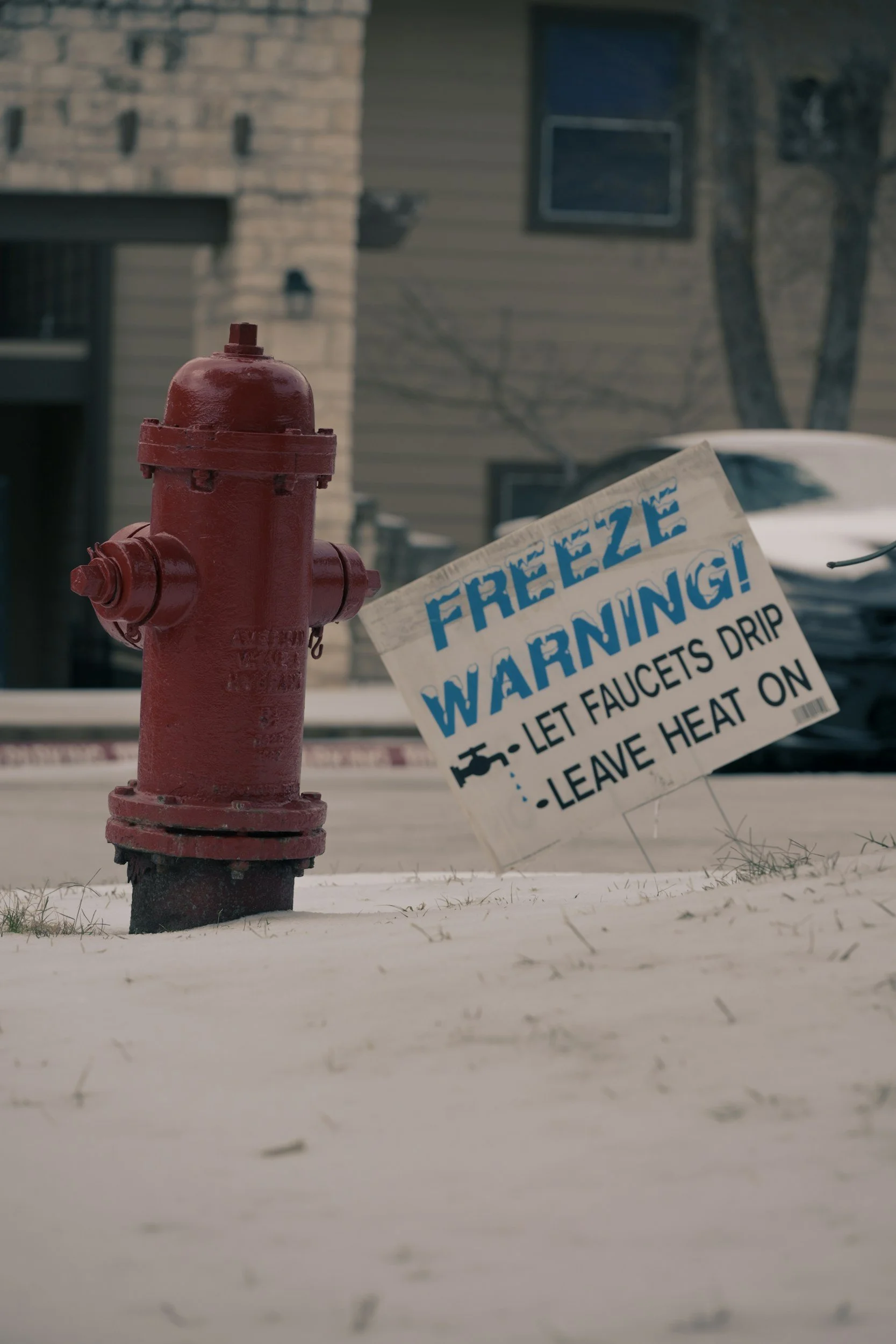
The last 96 hours have been a test of endurance for all of us in Louisiana. If you have returned home to a burst pipe and a flooded living room, your first thought—after "how do I stop this?"—is likely about insurance.
Specifically, we are hearing one worry over and over: "Will my insurance company deny my claim because I couldn't keep the house warm during the blackout?"
Here is how Louisiana homeowners insurance handles frozen pipes, "negligence," and grid failures.
The Direct Answer: Are You Covered?
For the vast majority of homeowners dealing with burst pipes right now, the answer is yes.
Under a standard Homeowners Policy (HO3), water damage from a burst pipe is classified as a "sudden and accidental" discharge of water. It is one of the most common claims we handle during winter weather events.
However, the fear of denial isn't unfounded. There is a clause in almost every policy regarding "freezing of plumbing" that you need to understand so you can confidently file your claim.
The "Negligence" Trap (And Why You Are Likely Safe)
Insurance policies have a "Maintenance" or "Neglect" exclusion. Essentially, the contract says that for frozen pipe damage to be covered, you must have done one of two things:
Maintained heat in the building, OR
Shut off the water supply and drained the system.
In a normal winter, if you went on vacation for a week, turned your thermostat off to save money, and your pipes burst, your claim would likely be denied. That is considered negligence. You failed to maintain heat.
But Winter Storm Fern was not a "normal" winter event.
How the "Deductible" Works in Real Life
To understand how aggressive this law is, here are two common scenarios under the current HB 434 rules:
Scenario A (Minor Accident): Your car has $5,000 in damage. You are uninsured. The other driver is at fault.
Result: You get $0. Because the damage is under the $100,000 exclusion threshold, the other driver’s insurance owes you nothing. You must pay for your own repairs out of pocket.
Scenario B (Major Accident): You have $50,000 in medical bills.
Result: You get $0. The first $100,000 is excluded so you are responsible for your own medical bills.
The "Power Failure" Defense
We are advising our clients that the widespread utility outages (like those seen with Entergy and other co-ops) provide a strong, documented defense against negligence allegations.
If you took reasonable steps to heat your home, but the infrastructure failed you, you were not negligent. You cannot be expected to maintain heat in a home when the power grid itself has collapsed for 90+ hours.
How To File A Claim For Burst Pipes To Avoid Denial
Expert tip for your claim: When you file, make sure to explicitly state: "I maintained heat as long as power was available. The loss of heat was due to a widespread utility outage beyond my control." This distinguishes your situation from someone who simply forgot to turn on the furnace.
Critical Distinction: "Water Damage" vs. "Flood"
This is the second most common point of confusion we are seeing.
In Louisiana, we are trained to fear the word "Flood." We know that standard homeowners policies do not cover floods. But you need to know the insurance definition of these words, because they are very different from the dictionary definitions.
Flood (Not Covered by Homeowners Insurance): This is rising water from the outside. If the storm surge or overflowing bayous entered your home, that is a flood claim (NFIP).
Water Damage (Covered by Homeowners Insurance): This is water escaping from the inside. If a pipe in your attic bursts and "floods" your kitchen, that is not a flood claim. That is "Water Damage," and it is covered by your standard homeowner policy.
What Should You Do Right Now?
If you are standing in water, stop reading and take these steps:
Mitigate the Damage (Required): You have a contractual duty to stop the damage from getting worse. Shut off the main water valve immediately. If you need a plumber to cap the line, call one. Keep the receipt—this is often reimbursable.
Document Everything: Do not throw away the damaged pipe segments until the adjuster tells you to. Take photos and videos of the water standing in the house, the damaged furniture, and the burst pipe itself.
Check Your "Loss of Use": If the water damage is severe enough that you cannot live in the home (e.g., no water, collapsed ceilings, wet drywall), your policy’s "Additional Living Expenses" (ALE) coverage generally kicks in. Unlike the power outage itself (which rarely triggers hotel coverage), a burst pipe that makes the home uninhabitable does trigger this coverage.
We Are Here to Help
To be frank, the next few weeks are going to be frustrating. Adjusters are overwhelmed, and timelines will be slow. But do not let fear of "negligence" stop you from filing a valid claim for a crisis you didn't cause.
We are helping our clients file their claims correctly, distinguishing between the power outage and the resulting damage, to ensure you get the coverage you’ve paid for. If you need assistance or want to prepare for next time, contact me.
Stay warm, Louisiana. We will get through this together, as always.

Hi, I’m Ronnie — founder of Landeche Insurance. I’m a lifelong Louisiana resident who believes insurance should be honest, local & easy to understand.

Protecting Louisiana families & property for 20+ years. Experts in homeowners, flood, auto, landlord, life & classic car insurance (& more) — with clear advice & coverage that fits you. Based in Louisiana. Real help from real people. 👉 Call 504-228-7184.

Get a flood insurance quote.
Get a homeowner’s insurance quote.

Get a life insurance quote.

