
Is it safe to lower my 'Dwelling Coverage' limit to offset my 2026 homeowners premium increase?
Can I safely lower my Coverage A to get my monthly premium back down?
We get it. When your 2026 homeowners insurance renewal arrives in the mail, you look at the new premium, wince, and immediately start searching for a way to cut the number down to size.
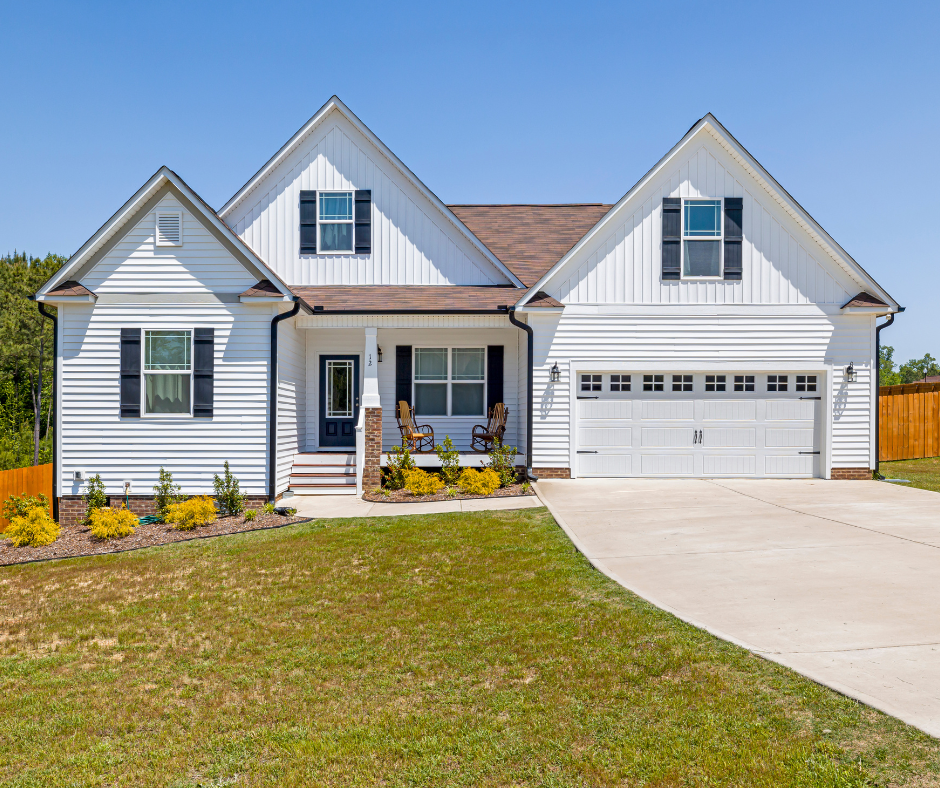
For many homeowners, the easiest target seems to be "Coverage A," also known as your Dwelling Coverage. This is the total amount the insurance company will pay to rebuild your house from the slab up. The logic seems sound: My house is insured for $350,000, but I don't think it would actually cost that much to rebuild. If I just log in and lower it to $275,000, my monthly premium drops by $30.
It seems like a simple adjustment. It takes five minutes on an online portal. But, it is arguably the most financially destructive decision you can make before hurricane season begins.
There is no scenario where artificially lowering your Dwelling Coverage is a safe financial move. When you drop that limit just to reduce your monthly premium, you immediately trigger a contractual trapdoor known as the 80% Co-Insurance Penalty.
The Hidden Trapdoor: The 80% Co-Insurance Penalty
This standard clause dictates that you must insure your home for at least 80% of its current replacement cost. If you dip below this threshold, the insurance company penalizes any partial claim you make, not just a total loss.
Insurance companies use this clause to force policyholders to carry adequate coverage. By intentionally underinsuring the property to save on premiums, you legally reclassify yourself as a "co-insurer." This means you have volunteered to pay a percentage of your own roof repairs or water damage restoration out of pocket.
The Math: How Underinsuring Destroys a Claim
Let’s look at the actual math of a partial loss, which is what happens in 95% of hurricane claims. You rarely lose the whole house; you lose the roof, some siding, and a ceiling.
Imagine your home’s true replacement cost is $300,000. To avoid the penalty, you must carry at least $240,000 in Coverage A (which is 80% of $300,000).
To save a few hundred dollars on your 2026 premium, you decide to lower your Coverage A to $180,000. You figure this is fine because you only ever expect to have minor storm damage, so you will never need the full $240,000 anyway.
A Category 2 storm hits. Your roof is torn off, causing $50,000 in damage.
Because you only carried $180,000 in coverage when you were required to carry $240,000, you are only carrying 75% of the required limit ($180,000 ÷ $240,000 = 0.75).
The insurance company will apply that 75% fraction to your $50,000 claim. They will pay you $37,500 (minus your deductible).
By trying to save $300 on your annual premium, you just cost yourself $12,500 in cash during a crisis. This penalty applies to every single claim you file until the policy limit is corrected.
Replacement Cost vs. Market Value
The most common mistake homeowners make when analyzing their coverage is confusing "Market Value" with "Replacement Cost."
Market value is what someone will pay for your house on the open market. It includes the land, the school district, and the neighborhood appeal.
Replacement cost is the exact price of lumber, drywall, roofing nails, and skilled labor required to rebuild the physical structure today. Insurers do not care about your school district; they care about the going rate for a framing crew in Louisiana after a named storm. In 2026, the cost of construction materials and labor remains exceptionally high. If your dwelling coverage hasn't increased in the last three years, you are likely already brushing up against the 80% penalty threshold without even realizing it. Lowering it intentionally guarantees you will be penalized.
A Blunt Assessment from the Agency Desk
As independent agents reviewing policies across Louisiana every day, we see the fallout of these decisions firsthand. Saving a few hundred dollars a year by artificially lowering your dwelling coverage is a massive unforced error.
You pay an insurance company to transfer your financial risk. When you lower your Coverage A below the 80% threshold, you are taking that risk right back. You are paying a premium just to be an unpaid partner in your own future catastrophe.
There are highly effective, mathematically sound ways to lower your 2026 homeowners premium. You can secure a Fortified Roof certificate to force a state-mandated discount. You can raise your "All Other Perils" deductible while leaving your Coverage A intact. You can even unbundle your home and auto policies, as auto rates have actually shown slight decreases in Louisiana recently.
But you do not touch the Dwelling Coverage.
How to Move Forward
If your 2026 renewal is unmanageable, the solution is not to carve up your own safety net. The solution is to have an independent agent run your specific risk profile through the current Louisiana rate tables. New reciprocal exchanges have entered the market this year, and some legacy carriers have adjusted their pricing.
Leave the Coverage A exactly where the replacement cost calculators say it should be, and let us shop the market to find a carrier who will insure that correct number for less.
Contact TWFG Landeche Insurance today. We will audit your current coverage, check your coinsurance risk, and ensure your home is protected by math that actually works in your favor.

Hi, I’m Ronnie — founder of Landeche Insurance. I’m a lifelong Louisiana resident who believes insurance should be honest, local & easy to understand.

Protecting Louisiana families & property for 20+ years. Experts in homeowners, flood, auto, landlord, life & classic car insurance (& more) — with clear advice & coverage that fits you. Based in Louisiana. Real help from real people. 👉 Call 504-228-7184.

Get a flood insurance quote.

Get a homeowner’s insurance quote.

Get a life insurance quote.

